
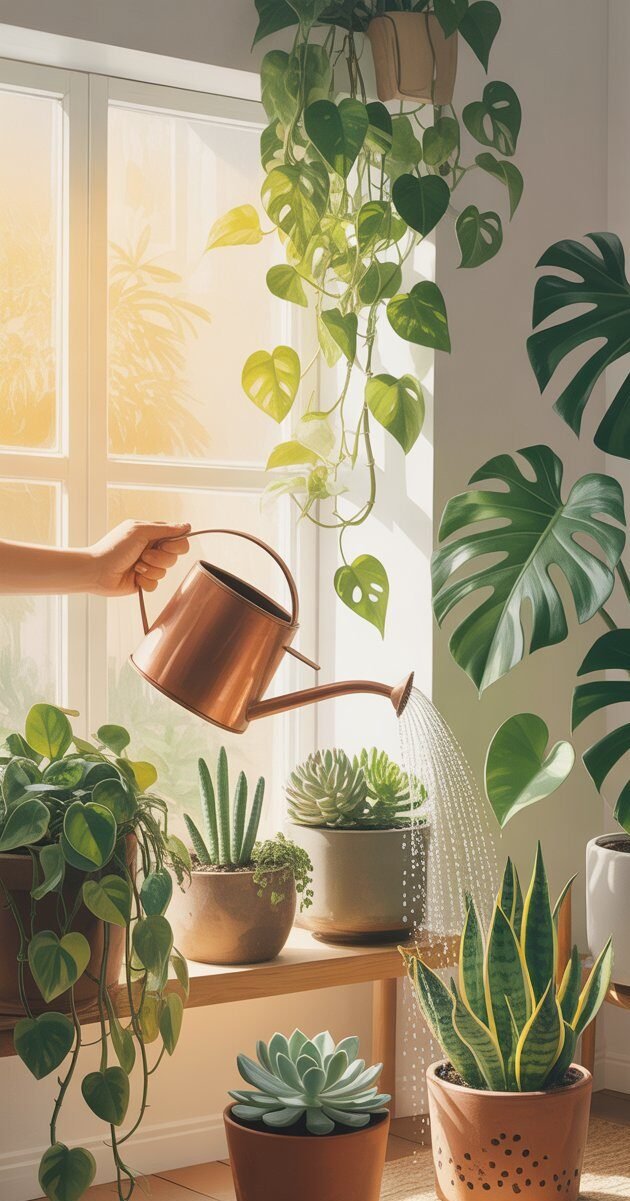
Watering indoor plants sounds simple—until your plant starts drooping, yellowing, or mysteriously dying. For beginners, the biggest challenge isn’t forgetting to water… it’s watering too much or too little. The truth is, there’s no one-size-fits-all schedule. Different plants, homes, and seasons all play a role.
This beginner-friendly guide will help you understand how often to water indoor plants, how to read your plant’s signals, and how to avoid the most common watering mistakes.
Why “Once a Week” Isn’t Right for Every Indoor Plant
Many beginners are told to water houseplants once a week. While that might work for some plants, it can seriously harm others.
Watering frequency depends on:
-
Plant type
-
Pot size and material
-
Indoor temperature and humidity
-
Light exposure
-
Season of the year
Understanding these factors is far more important than following a fixed schedule.
Start With the Plant Type
Different indoor plants have very different watering needs.
Succulents and Cacti: Water Sparingly
Succulents and cacti store water in their leaves and stems, which means they prefer dry soil.
-
Water every 2–4 weeks
-
Let the soil dry out completely between waterings
-
Overwatering is the #1 killer of these plants
Tip: If the leaves feel soft or mushy, stop watering immediately and let the soil dry out.
Tropical Houseplants: Moderate, Consistent Watering
Plants such as pothos, philodendrons, peace lilies, and monsteras prefer soil that stays lightly and consistently moist.
-
Water every 7–10 days
-
Topsoil should be dry, but soil underneath slightly moist
-
Never let them sit in standing water
These plants will usually “tell” you when they’re thirsty by slightly drooping.
Herbs and Leafy Plants: More Frequent Watering
Indoor herbs like basil, mint, and parsley dry out faster.
-
Water every 4–7 days
-
Soil should stay lightly moist
-
Smaller pots dry out quicker, so check often
Check the Soil, Not the Calendar
The most reliable way to know when to water is to check the soil.
The Finger Test (Beginner Favorite)
-
Stick your finger 1–2 inches into the soil
-
-
If it feels damp → wait a few days
This simple habit prevents most watering mistakes.
Drainage Is Non-Negotiable
Always use pots with drainage holes. Without drainage:
-
Water builds up at the bottom
-
Roots suffocate and rot
-
Plants decline quickly even if watered “correctly”
If a decorative pot doesn’t have drainage holes, place the plant in its plastic nursery pot and set it inside the outer container.
How Your Home Affects Watering Frequency
Your indoor environment plays a huge role.
Light Exposure
-
Bright light = soil dries faster
-
Low light = soil stays wet longer
Plants near sunny windows need more frequent checks.
Temperature and Humidity
-
Warm, dry air = more frequent watering
-
Cool or humid rooms = less watering
Heating systems in winter often dry out indoor air, increasing watering needs slightly.
Seasonal Changes Matter
Indoor plants don’t grow at the same speed all year.
Spring and Summer
-
Active growth period
-
Water more frequently
-
Plants use water faster
Fall and Winter
-
Growth slows down
-
Water less often
-
Soil stays moist longer
Many beginner plant problems happen because watering isn’t reduced in winter.
Signs You’re Overwatering (Very Common!)
If these symptoms appear, pause watering right away and allow the soil to dry completely.
-
Yellowing leaves
-
Soft or mushy stems
-
Mold or fungus on soil surface
-
Leaves falling off without drying first
Overwatering causes more harm to most indoor plants than forgetting to water them occasionally.
Signs You’re Underwatering
Underwatered plants show different symptoms:
-
Dry, crispy leaf edges
-
Wilting that improves after watering
-
Soil pulling away from the pot edges
These plants usually recover quickly once watered properly.
Best Watering Tips for Beginners
Keep things simple with these practical tips:
-
Water slowly until water drains from the bottom
-
Empty the saucer after watering
-
Use room-temperature water
-
Water in the morning when possible
-
Group plants with similar needs together
Consistency matters more than perfection.
So, How Often Should You Water Indoor Plants?
Here’s a simple beginner summary:
-
Succulents & cacti: every 2–4 weeks
-
Tropical houseplants: every 7–10 days
-
Herbs & leafy plants: every 4–7 days
-
Always adjust based on soil dryness, season, and light
Instead of asking “Is it watering day?”, ask “Does my plant actually need water today?”
Final Thoughts
Learning how often to water indoor plants is a skill that improves with observation, not rigid schedules. Once you start checking the soil and reading your plant’s signals, plant care becomes far less stressful—and much more rewarding.
Your plants don’t need perfect care. They just need attentive care 🌱