
Easy, Beginner-Friendly Houseplants That Thrive Without Much Sun
If you’ve ever looked around your home and thought, “I’d love indoor plants, but I don’t get enough sunlight,” you’re not alone. Many beginners assume that all houseplants need bright, sunny windows to survive. The good news? That’s simply not true.
There are plenty of low-light indoor plants that not only survive but thrive in rooms with limited natural light—like bedrooms, bathrooms, offices, hallways, or apartments with small windows. Choosing the right plants from the start saves you time, money, and frustration.
In this guide, you’ll discover the best indoor plants for low-light rooms, why they work, and how to care for them successfully—even if you’ve never kept a plant alive before.
What Does “Low Light” Really Mean Indoors?
Before picking a plant, it helps to understand what low light actually looks like inside a home.
A room is considered low light if:
-
It has north-facing windows
-
Sunlight doesn’t directly hit the plant
-
The room feels dim during most of the day
-
Windows are several feet away from where the plant sits
Why Low-Light Plants Are Perfect for Beginners
Low-light houseplants are ideal for beginners because they tend to be:
-
Slow growing (less maintenance)
-
Forgiving of missed watering
-
Adaptable to indoor conditions
-
Resistant to common mistakes
If you’re just starting your indoor gardening journey, these plants are a smart and confidence-boosting choice.
Best Indoor Plants for Low-Light Rooms
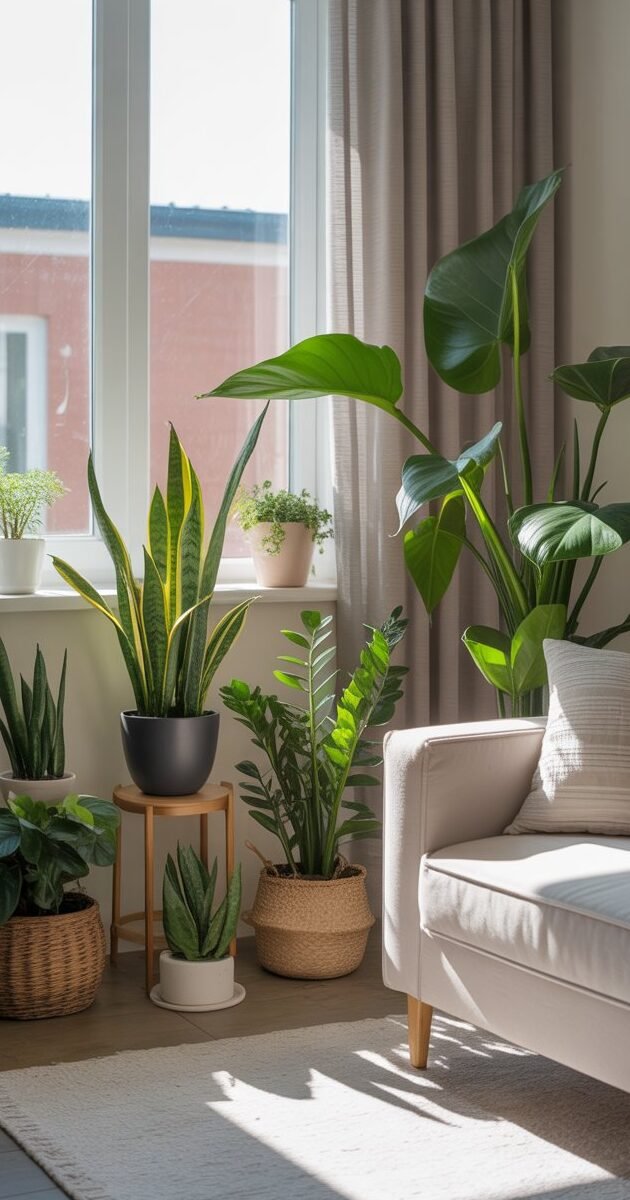
1. Snake Plant (Sansevieria)
Why it’s great for low light:
-
Tolerates very low light conditions
-
Doesn’t mind irregular watering
-
Helps improve indoor air quality
Care tips:
- Water only when the soil is completely dry
-
Avoid overwatering—this plant prefers neglect
-
Thrives in both low and medium light
Perfect for bedrooms, offices, and dark corners.
2. ZZ Plant (Zamioculcas zamiifolia)
If there were an award for the toughest indoor plant, the ZZ plant would win.
Why it works well:
-
Stores water in its thick roots
-
Handles low light with ease
-
Maintains glossy green leaves year-round
Care tips:
-
Water every 2–3 weeks
-
Keep out of direct sunlight
-
Wipe leaves occasionally to remove dust
This plant is ideal for busy people or frequent travelers.
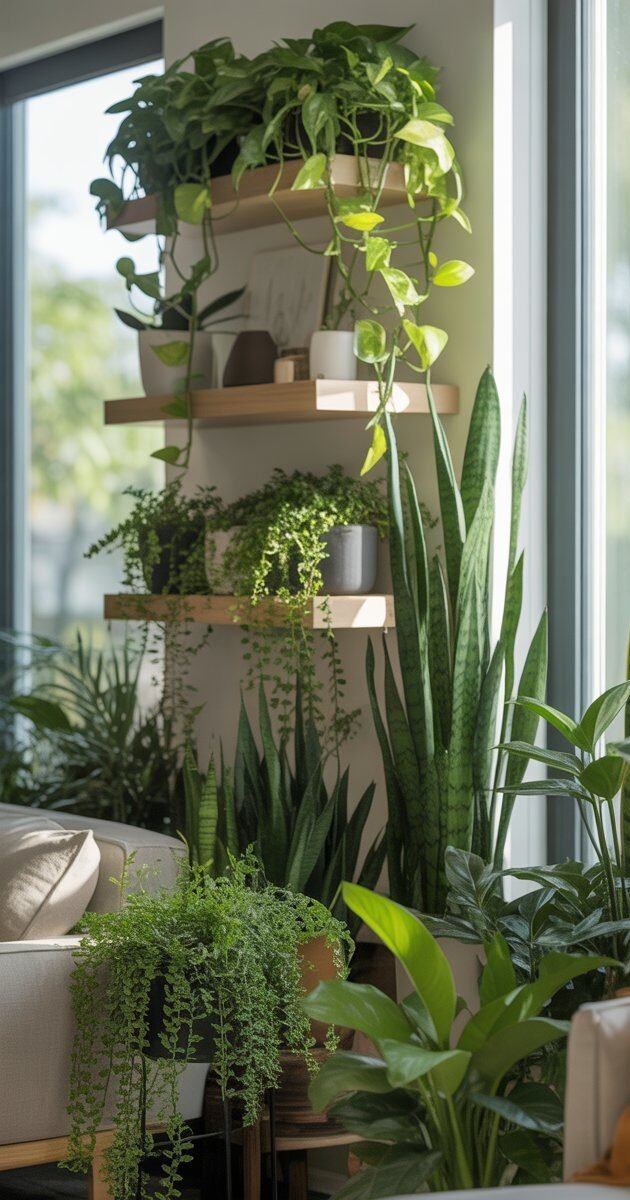
3. Pothos (Devil’s Ivy)
Pothos is often the first plant beginners fall in love with—and for good reason.
Low-light benefits:
-
Adapts to a wide range of light levels
-
Continues growing even in dim rooms
-
Can trail beautifully from shelves or hangers
Care tips:
- Water only after the soil surface feels dry to the touch.
-
Trim vines to encourage fuller growth
-
Avoid soggy soil
Golden pothos and jade pothos perform especially well in low light.
4. Cast Iron Plant (Aspidistra)
Living up to its name, this plant is exceptionally tough and long-lasting.
Why beginners love it:
-
Extremely tolerant of low light
-
Handles temperature changes well
-
Rarely affected by pests
Care tips:
-
Water moderately and consistently
-
Prefers indirect light
-
Slow growth means less maintenance
A great choice for hallways, offices, and entryways.
5. Peace Lily (Spathiphyllum)
Peace lilies are admired for their graceful white blooms and rich green foliage.
Low-light advantages:
-
Blooms even in low to medium light
-
Shows clear signs when it needs water
-
Helps improve indoor air quality
Care tips:
-
Keep soil lightly moist, not soggy
-
Drooping leaves mean it’s time to water
-
Avoid direct sunlight
Well suited for bedrooms and living areas with gentle, indirect light.
6. Chinese Evergreen (Aglaonema)
A decorative plant with patterned leaves that thrives indoors.
Why it’s perfect for low light:
-
Tolerates shade extremely well
-
Adds color without flowers
-
Adapts easily to indoor environments
Care tips:
-
Water when soil surface feels dry
-
Prefers warm rooms
-
Rotate occasionally for even growth
Great for apartments and office spaces.
7. Philodendron
A classic houseplant that’s both attractive and easygoing.
Low-light benefits:
-
Handles indirect and low light
-
Grows steadily without much care
-
Available in trailing and upright varieties
Care tips:
-
Water when the soil begins to dry
-
Avoid cold drafts
-
Prune to control size
Philodendrons are excellent for shelves and tabletops.
8. Spider Plant
While it prefers brighter light, it adapts well to low-light rooms.
Why it still works:
-
Extremely forgiving
-
Produces baby plants easily
-
Non-toxic for pets
Care tips:
-
Water when soil feels dry
-
Use well-draining soil
-
Trim brown tips if needed
Perfect for hanging baskets in shaded areas.
Common Mistakes to Avoid With Low-Light Plants
Even easy plants can struggle if basic mistakes are repeated.
Avoid these beginner errors:
-
Overwatering (most low-light plants need less water)
-
Placing plants in complete darkness
-
Using pots without drainage holes
-
Ignoring dust buildup on leaves
Low light slows growth, which also slows water usage—always adjust watering accordingly.
You may also like this
Easy Indoor Plants Anyone Can Grow
Indoor Plant Care for Beginners: A Complete Guide
How Often Should You Water Indoor Plants?
How to Boost Plant Health in Low-Light Rooms
You can still help your plants thrive by:
-
Placing them closer to windows (without direct sun)
-
Rotating plants monthly
-
Cleaning leaves for better light absorption
-
Using light-colored walls to reflect light
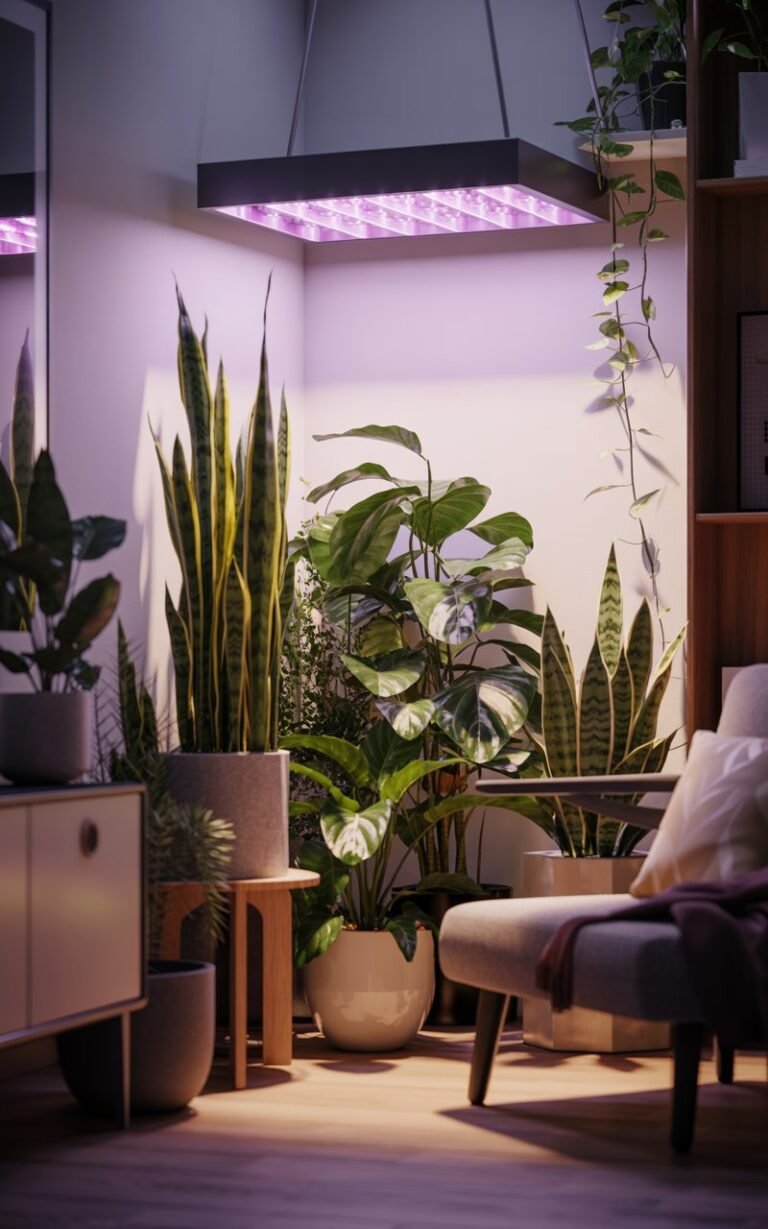
If needed, a soft indoor grow light can also support growth without overwhelming the plant.
Final Thoughts: Low Light Doesn’t Mean No Plants
Low-light rooms don’t have to be plant-free zones. With the right choices, you can enjoy healthy, beautiful indoor plants even in the dimmest spaces. Snake plants, pothos, ZZ plants, and peace lilies are all excellent starting points for beginners in the U.S. who want greenery without stress.
Start with one or two plants, learn their rhythm, and build confidence as you go. Indoor gardening is about patience—and the right plant makes all the difference.