
(A Beginner-Friendly Guide for Low-Light Homes)
Growing indoor plants without sunlight sounds impossible—especially if you live in an apartment, basement unit, or a home with small windows. Many beginners give up after a few failed plants, assuming they just “don’t have the light.”
Here’s the good news 🌿: you absolutely can grow healthy indoor plants without direct sunlight. You just need the right plants, smart placement, and a few care adjustments.
This guide will walk you through everything step by step—no gardening experience required.
Why Some Homes Lack Sunlight (And That’s Okay)
Not every home gets bright natural light. Common situations include:
-
North-facing windows
-
Apartments blocked by other buildings
-
Rooms far from windows
-
Offices or basements
-
Winter months with short daylight hours
Plants don’t all need sunbathing-level light. Many indoor plants evolved under forest canopies where sunlight is filtered and indirect.
The key is choosing plants that tolerate low light and adjusting how you care for them.
Understanding Light Levels Indoors (Simple Version)
Before picking plants, it helps to understand indoor light in basic terms:
Low Light
-
No direct sun
-
Room feels dim during the day
-
Light mainly from lamps or distant windows
Medium Light
-
Bright room but no sun hitting the plant
-
Light comes from nearby windows
For this article, we’re focusing on low-light conditions—places where sunlight is minimal or nonexistent.
Best Indoor Plants That Grow Without Sunlight
These plants are beginner-proof and known for surviving (and thriving) in low light.
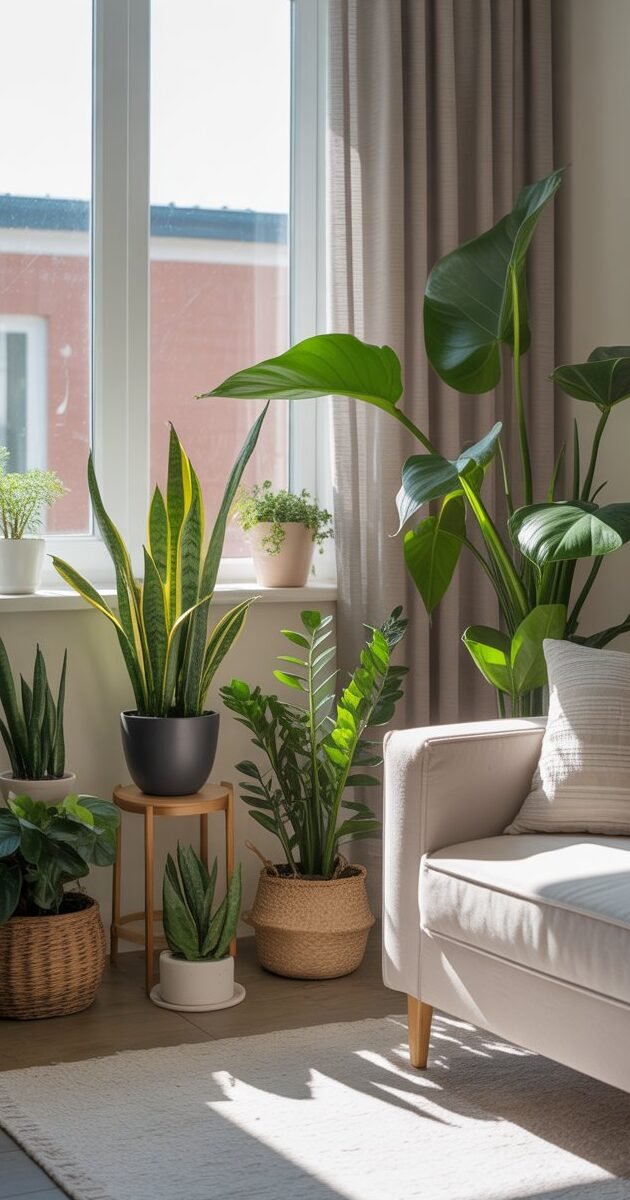
Snake Plant (Sansevieria)
-
One of the toughest houseplants
-
Tolerates very low light
-
Needs infrequent watering
Why it works: Thick leaves store moisture and adapt easily to dim spaces.
ZZ Plant (Zamioculcas zamiifolia)
-
Shiny leaves, slow-growing
-
Handles low light and neglect
-
Great for offices and bedrooms
Why it works: Stores water in underground rhizomes.
Pothos
-
Trailing plant for shelves or hanging baskets
-
Grows in low to medium light
-
Very forgiving
Tip: Growth will be slower without sun, but leaves stay healthy.
Peace Lily
-
Elegant green leaves
-
Tolerates low light well
-
Droops when thirsty (helpful for beginners)
Cast Iron Plant
-
Lives up to its name
-
Handles low light, poor air, and missed waterings
Chinese Evergreen (Aglaonema)
-
Decorative leaves
-
Thrives in low-light rooms
-
Ideal for living rooms and offices
Where to Place Plants in Low-Light Homes
Even without sunlight, placement still matters.
Smart Placement Tips:
-
Put plants near the brightest part of the room, even if there’s no sun
-
Avoid dark corners with no ambient light
-
Keep plants near white or light-colored walls that reflect light
-
Rotate plants every few weeks so all sides get exposure
💡 Light doesn’t have to be direct to be useful.
Using Artificial Light to Replace Sunlight
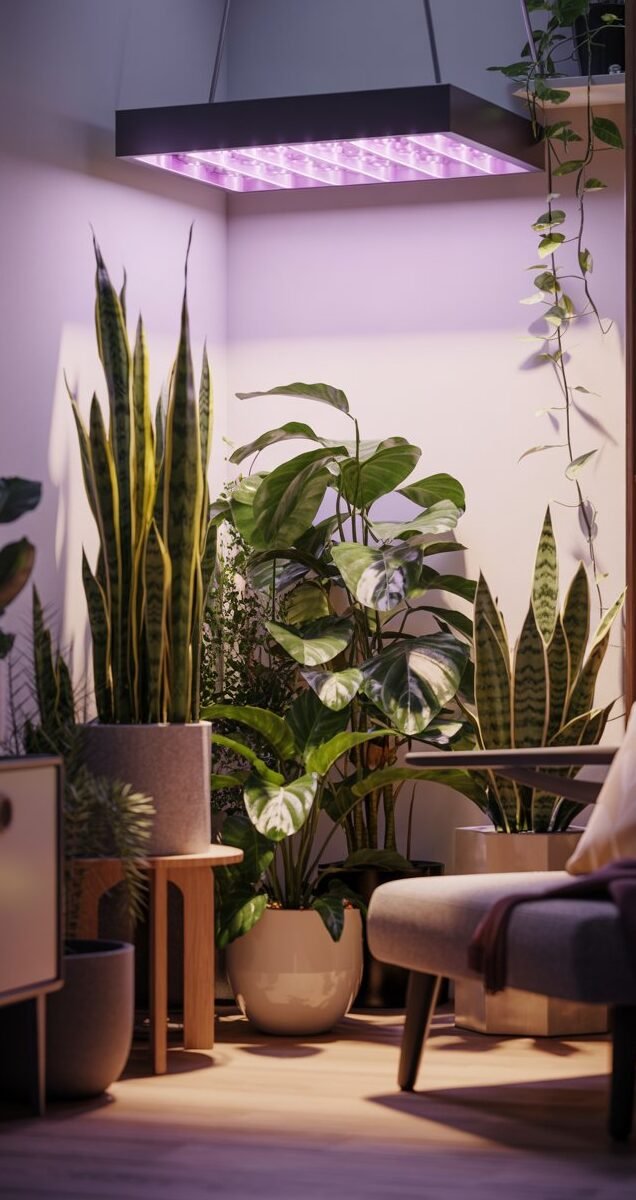
If your space has almost no natural light, artificial lighting can fully replace sunlight.
Best Grow Light Options for Beginners:
-
LED grow lights (energy-efficient)
-
Full-spectrum bulbs
-
Clip-on or standing grow lamps
How to Use Grow Lights Correctly:
-
Place lights 12–24 inches above plants
-
Run lights 10–12 hours per day
-
Use a timer to stay consistent
You don’t need expensive setups. Even a single LED grow bulb can support several low-light plants.
Watering Plants Without Sunlight (Very Important)
Plants in low light use water more slowly, so overwatering is the most common mistake.
Golden Watering Rules:
-
Always check soil before watering
-
When the top layer of soil appears dry → Water the plant
-
If soil feels damp → wait
-
Use pots with drainage holes
🚫 Never water on a schedule. Light level affects water needs.
Choosing the Right Soil and Pots
Best Soil for Low-Light Plants:
-
Well-draining indoor potting mix
-
Avoid heavy garden soil
Pot Tips:
-
Drainage holes are essential
-
Use nursery pots inside decorative planters
-
Empty excess water after watering
Healthy roots matter more when light is limited.
Fertilizing Plants in Low Light
Low-light plants grow slowly, so they need less fertilizer, not more.
Simple Fertilizer Guidelines:
-
Feed her once every month or 8 weeks during the spring and summer.
-
Skip fertilizer in winter
-
Use diluted liquid houseplant fertilizer
Too much fertilizer can harm plants, especially in low light.
Common Problems (And How to Fix Them)
Yellow Leaves
-
Often caused by overwatering
-
Let soil dry out more between waterings
Leggy or Weak Growth
-
Plant needs more light
-
Move closer to ambient light or add a grow light
No New Growth
-
Normal in low light
-
Focus on maintaining healthy leaves
Low-light plants grow slower—but slow doesn’t mean unhealthy.
Can You Grow Plants in Rooms With No Windows?
Yes—with artificial light.
Plants don’t care where light comes from as long as it’s consistent and strong enough. Many offices and bathrooms successfully grow plants using grow lights alone.
You may also like this
Indoor Plant Care for Beginners: A Complete Guide
How Often Should You Water Indoor Plants?
Beginner Mistakes to Avoid
-
Assuming all plants need sunlight
-
Overwatering due to slow growth
-
Using decorative pots with no drainage
-
Giving up too quickly
Indoor plants are resilient. Most problems are fixable.
Final Thoughts: You Don’t Need Sun to Grow Plants 🌱
If you’ve avoided houseplants because your home lacks sunlight, you’re not alone—and you’re not out of luck.
By choosing low-light plants, watering carefully, and using artificial light when needed, any space can support indoor greenery.
Start with one plant. Learn its rhythm. Confidence grows with experience.